
Understanding Treatment Costs & Outcomes in Parkinson’s Disease
This large-scale Medicare-based study, conducted by ACT founder Dr. Renée Arnold and colleagues, reveals key insights about how different formulations of carbidopa–levodopa—commonly prescribed for Parkinson’s disease (PD)—affect real-world healthcare costs, treatment patterns, and patient outcomes. This is an example of a retrospective burden of illness study based off of real data to demonstrate unmet need and value proposition.
This study explored:
- Patterns of use for four levodopa-containing regimens (IR, immediate release carbidopa/levodopa; IR+CR, immediate release + controlled-release carbidopa/levodopa; CR, controlled release carbidopa/levodopa; ER, extended release carbidopa/levodopa).
- How treatment persistence, switching, and dosage changed over time.
- The economic burden associated with each regimen and with disease severity.
- The use of additional medications (e.g., dopamine agonists, MAO-B inhibitors).
Levodopa Equivalent Daily Dose (LEDD) was used as a proxy for the severity of a patient’s Parkinson’s Disease. The study found that patients with higher LEDD had slightly longer treatment duration and better persistence; greater use of adjunct medications; and higher outpatient and prescription drug costs.
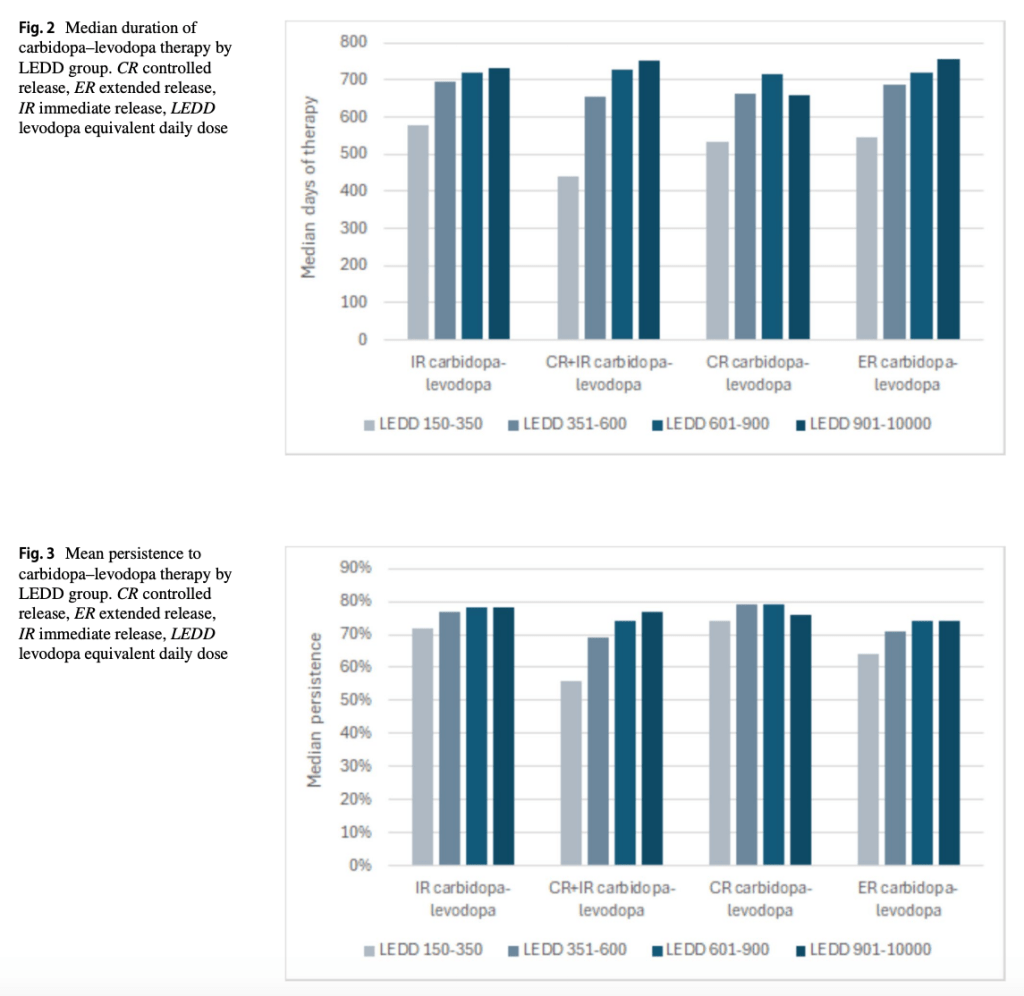
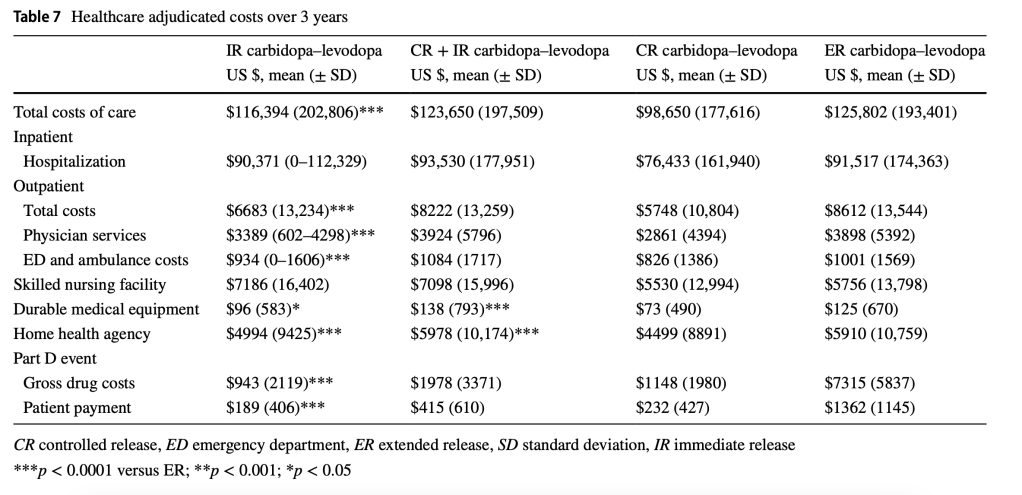
Total 3-year healthcare costs were lower for patients prescribed CR carbidopa–levodopa (US $98,650) compared with other formulations. Duration, persistence, and overall costs tended to increase with levodopa load, primarily driven by outpatient care and medication costs.
To read the full study, click here.
 Arnold Consultancy and Technology, LLC